


What do we trust? We live in a world of endless options, but little guidance about what is worth giving our lives to. The ‘wellness industry’ has exploded over the last few years, and there are now all kinds of different retreats on offer.
Taraloka has been offering Buddhist retreats to women since 1985 – but the world today is very different. UK internet searches for “wellness retreats” apparently increased by a massive 1,605% since 2015. What, then, makes a Buddhist retreat what it is? How might it differ from your average wellness weekend?
Ethics
“If one speaks or acts with an impure mind, suffering follows even as the cartwheel follows the hoof of the ox. If one speaks or acts with a pure mind, happiness follows like a shadow that never departs.” – The Buddha, The Dhammapada
Twenty years ago, retreat centres were an alien concept for many. Fairly or unfairly, there was a view that they catered to a niche section of society who sought to remove themselves from the grind of daily life. Retreats are still about choosing to step out of our often-hectic lives for a period – it’s in the name. Mainstream ‘wellness’ ways of thinking about this are that we’re ‘recharging our batteries’ or ‘chilling out’. Retreats can help us therapeutically to stay emotionally well or recover from stress or burnout – so we can carry on with our lives in the same old way. And it’s true – taking space, being in nature and regaining a sense of perspective can help with ‘wellness’.
But a Buddhist retreat is about more than that. It’s about discovering what is truly important in life – not by being told by some external source, but learning to recognise the deepest values within ourselves. Then we’re discovering how to live from those values in our everyday lives – within this difficult, confusing world.
In learning meditation, we seek to change our minds and change our habits of thinking. The goal is not only a greater sense of ease: it is to change how we relate to others in the world. This means changing our way of behaving as well. On retreat, we are trying to grow our sense of loving-kindness and compassion, our capacity for generosity and simplicity in life, and enhance our commitment to an awareness of others. In short, we are working on how to truly live by our deepest values, and the hope is to take these back into the world when we return.
Working With the Mind
“All experience is preceded by mind, led by mind, made by mind.” – The Buddha, The Dhammapada
Buddhist retreats are challenging. We become more aware of how we are, how we think and how we act. That doesn’t always mean meeting with the comfortable parts of ourselves. In meditation, we can confront resistance. This can come in the form of boredom, craving, anxiety and doubt. Coming into contact with these often points to something deeper going on. It might be a situation at work. It might be finding out what sends us into judging and blaming in friendship. It might be accepting that our cravings and desires aren’t working for us any longer.
Whatever it is, a Buddhist retreat will ask you to change. That isn’t always easy. We are patiently working on our minds and returning again and again to our direct experience, unmediated by our phones and other devices. This allows us to truly see what is required of us. Once we do, it is hard to go back.
Compassion
“Not by hatred are hatreds ever pacified here (in this world). They are pacified by love. This is the eternal law.” – The Buddha, The Dhammapada
It is fundamental to Buddhism that greed, hatred and delusion will only ever keep us and the world in a state of suffering. Seeing and learning to overcome emotional exhaustion is part of the path. Without compassion – including towards ourselves – that journey will be almost impossible.
We also can’t more ethical without cultivating a greater sense of compassion. In a way, our ability to grow is always limited by the extent of our compassion towards ourselves – and others. Confronting our habits with a ‘drill-sergeant’ mentality might sound noble but ultimately, it doesn’t work. Specific meditation techniques like the Metta Bhavana are all about making sure there is a context of kindness for our practice. From there, we grow.
Going Beyond Ourselves
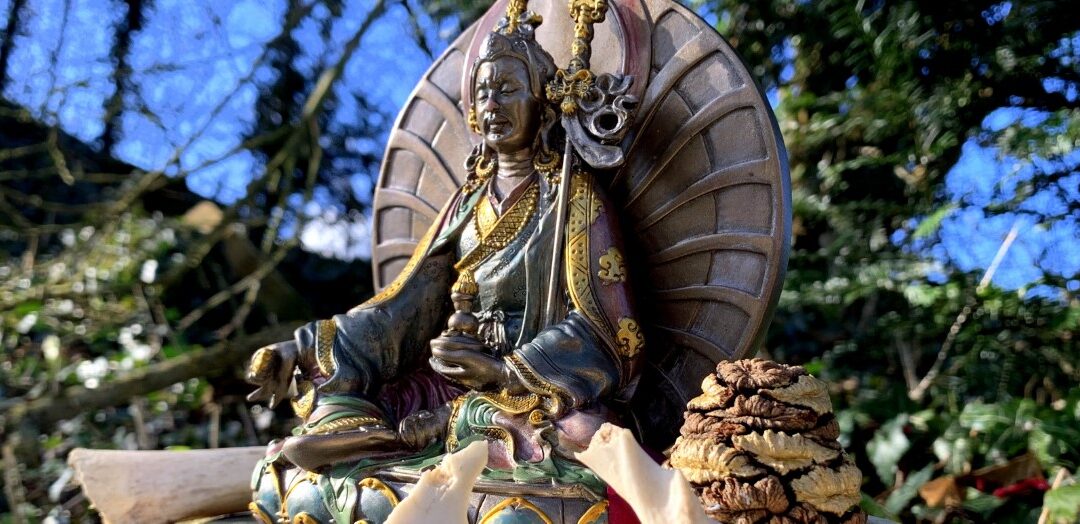
Ritual and chanting are important parts of Buddhist retreats. They are there to awaken us to the fact that there is something bigger than our current self, and that we have the potential to grow spiritually. And the more we grow spiritually, the more we experience a sense of purpose and meaning in our lives. None of this involves praying to an external supreme being. The Buddha represents what we too can become. But it does involve recognising that we can be more than we are at present. If we connect to the vision for human potential, that truly transforms us. When we look to something bigger, we become something bigger.
When we engage with the Buddha’s teachings and the Buddha, we go beyond ourselves and a narrow perspective on life. Buddhist retreats ask us to actively move towards our ideals and embrace this vision of our own potential – what a Buddhist calls ‘Enlightenment’.
Try it On!
So, a Buddhist retreat is about choosing who we want to become, opening to our potential, and finding liberation from our old ways of being. That will evidently require trying something new – even if for a weekend. The Buddha emphasised the importance of testing things out in our own experience, so if you can approach a retreat with a sense of adventure and curiosity, you’ll get a real taste of what makes a Buddhist retreat distinctive.